The boy didn’t know - he muttered,
“I only know the father of Preethi”.
Preethi was the lecturer’s daughter !
It didn’t strike me then - but over the years, I couldn’t help but notice, that subjects always had fathers - from taxonomy to toxicology.
What if there was a mother?

Dr.Padmavathy
Sivakrishna Iyer Padmavathy, was born to a barrister in 1917 towards the fag end of World War I, and a year before the Spanish flu swept the world. She was intelligent and aced the exams , thus landing a seat in Rangoon medical college. When she completed MBBS, the clouds of war had been looming on the horizon. Japan attacked Burma in 1942, in their quest for global dominance. The Imperial Japanese army was notorious for its war crimes. The menfolk of the family couldn’t run away - but hurriedly sent Padmavathy across the border to India. Overnight, life had changed. She wasn’t sure if she would see her homeland again.
A lesser mortal would have craved stability. S Padmavathy didn’t just find refuge in our country , but also in medical books. She flew to Edinburgh for post graduation, where she developed a keen interest in matters of the heart. No - not the “normal” kind , but Cardiology. She then hopped across the Atlantic, to land in Johns Hopkins University where she learnt pediatric cardiology under the legendary Dr Helen Brooke Taussig. She then went on to learn adult cardiology under another pioneer Dr Paul White in Harvard.
After completion she went back to Burma , only to be told that she was “overqualified” and had no job ! Burma’s loss was India’s gain. She got appointed as lecturer in Lady Hardinge Medical college and quickly became professor. Unlike the west, India had a tsunami of Rheumatic heart disease, which fascinated her and became her lifelong focus. Back in those days, women didn’t like to consult male doctors. Lady Hardinge was by women for women - an idea Dr Padmavathy didn’t endorse. Despite objection by old timers who saw LHMC as the last bastion of women, she opened a cardiac clinic that served everyone.
Soon she got a grant from Rockefeller foundation and started a cardiac catheterisation lab, a place where men sought to work under her tutelage. She had almost single handedly changed the gender equation in the Indian cardiology scene, which was nascent then. She founded the All India Heart foundation and soon moved to Maulana Azad medical college, as the government sought to give a bigger platform for her services.
From starting the first department of Cardiology in GB Pant to starting the first DM in Cardiology in India to becoming the first Indian woman to become Secretary of World Cardiology congress, even her “firsts” are too many to count. Her stature was such that she was the chief administrator of 3 institutions at the same time - MAMC, Lok Nayak hospital and GB Pant hospital !
Padma Bhushan and Padma Vibushan soon followed. After retirement, as you might guess, she didn’t relax - she started the National Heart Institute in Delhi. It had become famous, thanks to her leadership.
She loved her profession and her patients.She didn’t just have a laser sharp brain and a heart of gold, she also had nerves of steel. When an MP was admitted to the National Heart Institute, Prime Minister Narasimhra Rao went to meet him. His security personnel went inside the hospital with sniffer dogs - to ensure the Prime Minister’s safety. The feisty Dr Padmavathy refused admission to the sniffer dogs and the PM !
Even at the ripe old age of 90, she continued academics by joining European Society of cardiology - which honored her for being the senior most member of the organization.She survived the first pandemic and couple of World wars, but the second one -Covid - got her. She passed away in August 2020 at the age of 103.
At long last, the world called her the Godmother of cardiology - for she had birthed Cardiology in India. So the next time you wonder, if there’s a mother of any field, remember the name - Dr S.I. Padmavathy.
@KarthikBalachandran
I have many doctors amongst family and friends and I have never heard any one talking about this Dr Padmavathi. She reminds me of my very own Aunt Mothers Older sister Dr Iravathy who was also born in Rangoon and fled to India when the Japanese attacked Burma and she too went to UK and got a PhD in Geography and became the Principal of Queen Marys College in Madras on Beach Road.
So I had to find out more about Dr Padmavathy:
She was admitted to the National Heart Institute (NHI) 11 days ago and later developed pneumonia. She was put on ventilator support but suffered a cardiac arrest on Saturday.
Written by Astha Saxena | New Delhi |
Updated: August 31, 2020 8:29:16 am
Written by Astha Saxena | New Delhi |
Updated: August 31, 2020 8:29:16 am
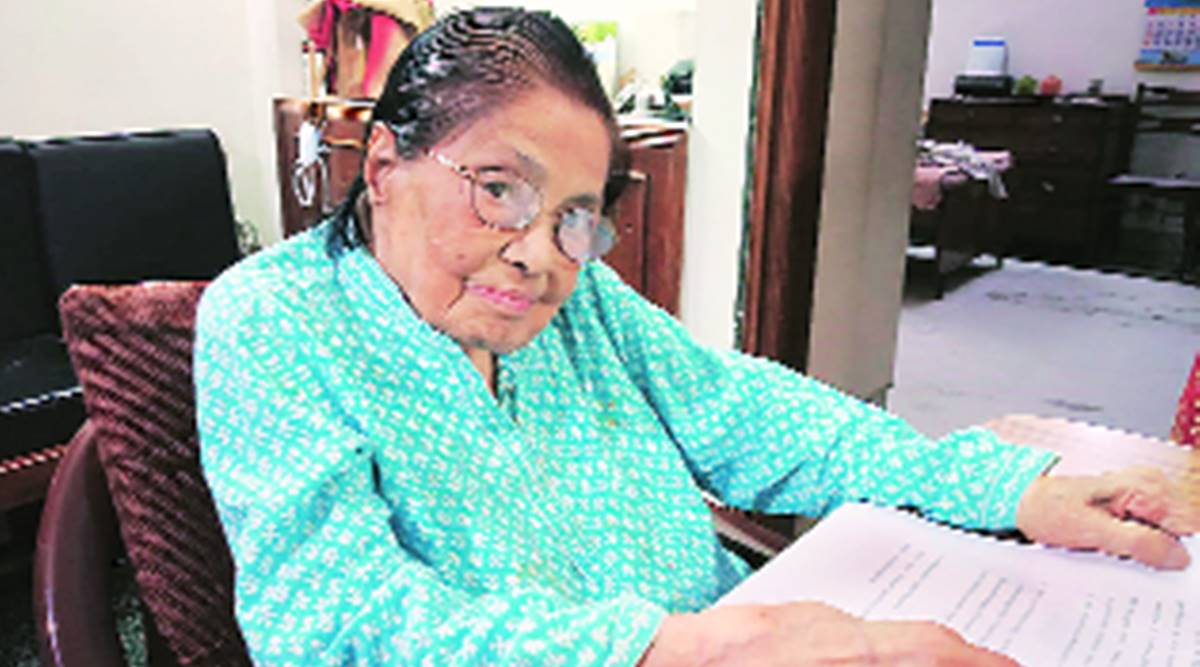
Dr Padmavati passed away Saturday after
contracting Covid-19 earlier this month.
A strong-willed woman, a pioneer in cardiology and a doctor with a heart of gold – this is how the medical fraternity remembers 103-year-old cardiologist
Dr Padmavati Sivaramakrishna Iyer, known simply as Dr Padmavati, who passed away Saturday after contracting Covid-19 earlier this month.
She was admitted to the National Heart Institute (NHI) 11 days ago and later developed pneumonia. She was put on ventilator support but suffered a cardiac arrest on Saturday.
The founding director of NHI, she was awarded the Padma Bhushan in 1967 and the Padma Vibhushan in 1992. She was also the recipient of Harvard Medical International Award, Dr BC Roy Award and Kamla Menon Research Award.
“In 1972, when I joined Maulana Azad Medical College as a first-year MBBS student, Madam Padmavati was the director, the head of the medical college. She is the most illustrious name in the field of cardiology in this country.
She strings together scores and scores of cardiologists to whom she was a teacher as well as a mentor. Even till the last moment, she was very sharp and would put us to shame at times when we would not recount an incident but she would remember it. She was a health enthusiast and swam till the age of 93-94 years. She loved playing tennis, which she gave up some time ago. Her physical abilities were restricted over the last five years,” said Dr OP Yadava, Chief Cardiac Surgeon and Chief Executive Officer at NHI.
Born in 1917 in Burma, now Myanmar, she graduated from Rangoon Medical College from where she started her career in cardiology.
In 1967, she took over as Director-Principal of Maulana Azad Medical College where she also set up a Cardiology Department. She then introduced the DM course in Cardiology and other super specialities like the first coronary care unit and the first coronary care van in India. She also established North India’s first Cardiac Catheterisation Laboratory at Lady Hardinge Medical College in 1954.
“She was a role model. We learnt a lot from her that helped us establish a healthy relationship with patients.
She was admitted to the National Heart Institute (NHI) 11 days ago and later developed pneumonia. She was put on ventilator support but suffered a cardiac arrest on Saturday.
The founding director of NHI, she was awarded the Padma Bhushan in 1967 and the Padma Vibhushan in 1992. She was also the recipient of Harvard Medical International Award, Dr BC Roy Award and Kamla Menon Research Award.
“In 1972, when I joined Maulana Azad Medical College as a first-year MBBS student, Madam Padmavati was the director, the head of the medical college. She is the most illustrious name in the field of cardiology in this country.
She strings together scores and scores of cardiologists to whom she was a teacher as well as a mentor. Even till the last moment, she was very sharp and would put us to shame at times when we would not recount an incident but she would remember it. She was a health enthusiast and swam till the age of 93-94 years. She loved playing tennis, which she gave up some time ago. Her physical abilities were restricted over the last five years,” said Dr OP Yadava, Chief Cardiac Surgeon and Chief Executive Officer at NHI.
Born in 1917 in Burma, now Myanmar, she graduated from Rangoon Medical College from where she started her career in cardiology.
In 1967, she took over as Director-Principal of Maulana Azad Medical College where she also set up a Cardiology Department. She then introduced the DM course in Cardiology and other super specialities like the first coronary care unit and the first coronary care van in India. She also established North India’s first Cardiac Catheterisation Laboratory at Lady Hardinge Medical College in 1954.
“She was a role model. We learnt a lot from her that helped us establish a healthy relationship with patients.
My first encounter with her was at the examination hall in MAMC when she came as an external examiner. She had a reputation of being strict and we were very scared of her. In 1974, I got a chance to interact with her when I joined the MD medicine at MAMC. My thesis was later guided by her and I got to work with her closely. She was disciplined, dedicated, and never said no to poor patients… In those days, cardiology was not as developed as it is now and only basic CATH lab was available. Her opinions hold great value and were highly acknowledged across the country. At a time when coronary heart disease was not even an issue, she gave strong emphasis on prevention of heart disease,” said Dr KK Sethi, chairman of Delhi Health and Lung Institute.
